Bringing the Experiences of Texans of Mexican Descent and Tejanos to the Forefront
The purpose of this portal is to provide visitors with historical records documenting the experiences of Mexican communities in Texas since their origins. Highlighting sources and organizations that preserve the experiences and people that shaped Texas. The culture has flourished on both sides of the border, though it has also faced significant challenges. The history of Mexican Texans includes periods of oppression, hardship, and complex identity formation, including instances where cultural and linguistic expression was restricted. During the Repatriation of the 1920s, many Americans of Mexican descent were forcibly expelled from their homeland, despite being born in the United States. Others were coerced to relocate to Mexico with promises of greater things. Citizenship by birth did not always ensure protection or opportunity. These historical conditions continue to influence the present-day experiences of the community.


Hispanic Political Struggles and Grassroots Movements in Texas
The history of Hispanic politics in Texas has been marked by persistent struggles—not only for basic representation, but also for the opportunity to have a meaningful voice in the democratic process. While assembling an anthology of these struggles is a valuable endeavor, it merely scratches the surface of a complex and deeply rooted history that has shaped the present moment.
Grassroots Movements and Their Impact
It is widely accepted, and fiercely believed among advocates, that the most significant social movements often begin at the grassroots level. These movements serve as the foundation for broader change and reflect the collective will of the community. However, a recurring challenge is that many grassroots organizations tend to operate independently from one another. This independence affords each group a degree of autonomy and freedom, but it comes with a steep price.
When organizations work in isolation, their ability to influence change is restricted. Limited collaboration means reduced access to resources and diminished collective power, which ultimately hampers the effectiveness of their efforts.
The Urgency of Political Equity
The overarching goal is to ensure that democracy functions for everyone. This is especially critical for Hispanic voters in Texas, who continue to face barriers to achieving political equity and equality. There remains a pressing need to amplify the voices of those whom current leadership has failed to hear, and as a result, these individuals have not received effective representation.
The obstacles to building political capital among Hispanic voters are substantial and complex. Nonetheless, the task of addressing these challenges is both urgent and necessary to create a more inclusive and representative democracy.


The Texas Hispanic Caucus discuss the importance of voting. Take a listen. Host is Philip Ruiz. The struggles are far from over.
The pivotal starting point
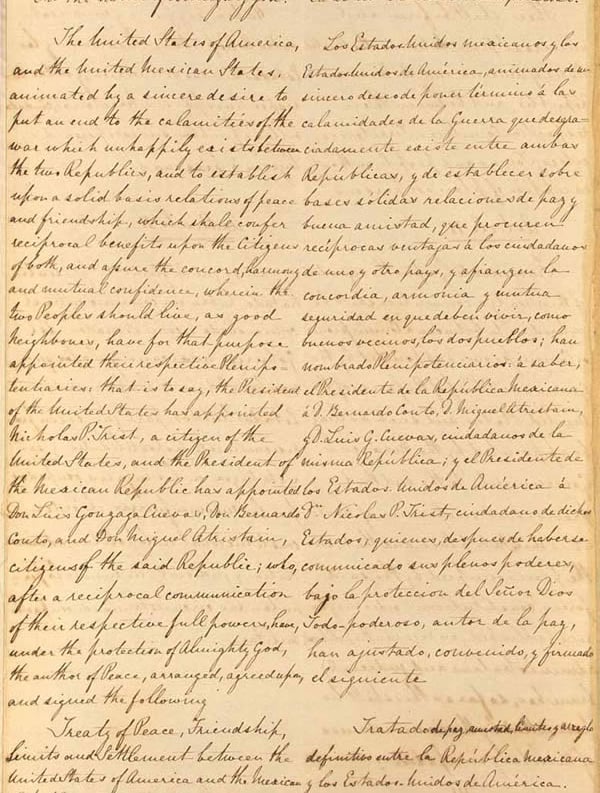
The Treaty of Guadalupe - Hidalgo
EnlargThis treaty, signed on February 2, 1848, ended the war between the United States and Mexico. By its terms, Mexico ceded 55 percent of its territory, including the present-day states California, Nevada, Utah, New Mexico, most of Arizona and Colorado, and parts of Oklahoma, Kansas, and Wyoming. Mexico also relinquished all claims to Texas, and recognized the Rio Grande as the southern boundary with the United States.
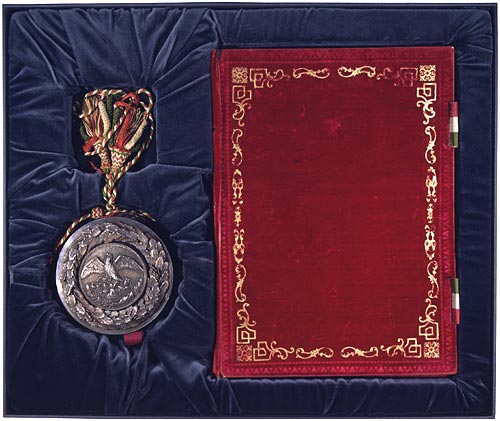
Treaty of Guadalupe Hidalgo (1848)